Land Ruptures
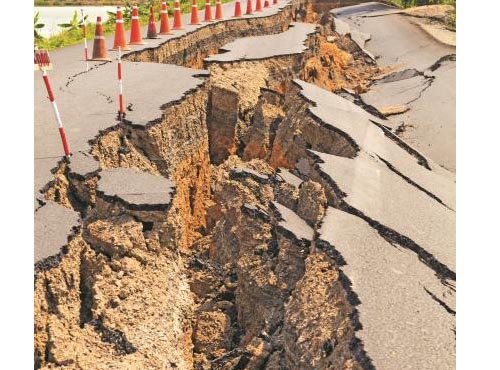
The shock near the epicenter can cause land surfaces to break open. Fissures or cracks can also be found in some distant areas from the epicenter. The tremors may even force water, mud, and sand out of the ground through these cracks because of the pressure caused by the movement of the underground rocks. Houses and trees can collapse because of the big cracks on the land surfaces.
Land Slippage
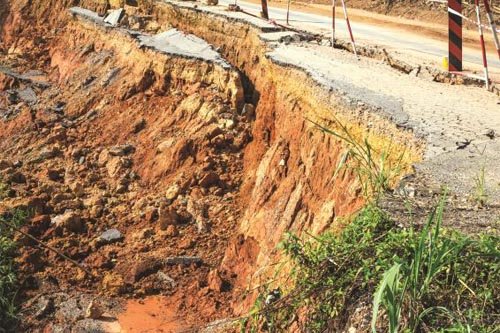
During an earthquake, side-by-side sliding movement of the ground may take place. Along the fault, rock layers sink or move down while the other slab moves up. This movement can be observed in things that seem to rise, bend, or twist after an earthquake. This creates high cliffs and sinking low lands. Land surfaces bend or create waves or folds, forming small mounds or hills.
Landslides
Hillsides and high cliffs become unstable as the strong shocks of an earthquake cause landslides. Masses of rocks slip down from highlands, thus, flattening the highlands. Mountains change their shapes when some of their parts slip down. Lowlands are filled up with falling and sliding rocks and soil.