Reptiles
Reptiles are vertebrates with dry, scaly skin that helps prevent their bodies from losing water in hot environments. Some of them shed skin periodically as they increase in size. They also breathe with their lungs.
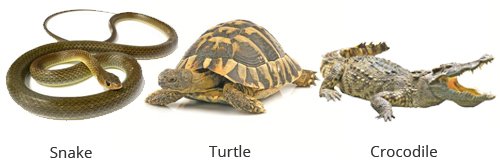
All reptiles produced by internal fertilization, in which the male deposits sperm cells in the body of the female. The female lays eggs with shells and membranes that prevent the developing embryo from drying out. They are ectothermic or cold-blooded, meaning having temperatures that change according to the temperature of their surroundings. Snakes, turtles, and crocodiles are examples of reptiles.
Birds
Birds are omnivorous vertebrates that have distinct body parts such as beaks, wings, feathers, and claws. Their size varies from small to big. Birds are endothermic or warm-blooded, which means that they maintain a constant body temperature. This enables them to be continuously active even in cold weather.
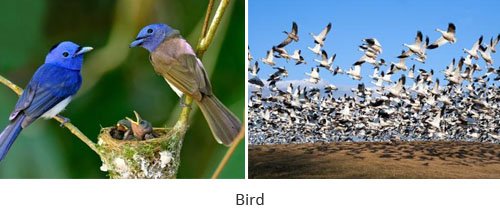
Birds have sense organs and a nervous system that are well developed. They also have excellent muscle reflexes. Their ability to fly helps them find and obtain food from different habitats. Birds lay hard-shelled eggs. The number of eggs varies among different species.
