Blood Circulation
Systemic Circulation
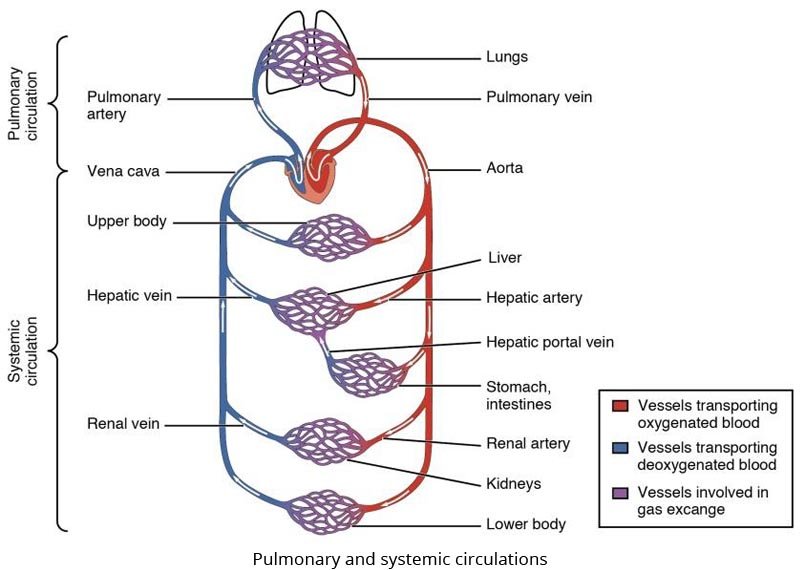
Another type of blood circulation is systemic circulation. In this process, the oxygen-rich blood from the lungs flows through the pulmonary vein, enters the left atrium, and goes to the left ventricle through the mitral valve or bicuspid valve. The left ventricle pumps the blood that passes through the aortic valve and the aorta, which is the largest artery, to the different parts of the body. The blood flows through the arteries and then enters the capillaries, where nutrients and oxygen are absorbed.
Waste products, including carbon dioxide, are collected by the blood, which then flows through the veins and back to the heart. Systemic circulation is responsible for the distribution of oxygen and nutrients to all parts of the body. The blood enters the lungs in pulmonary circulation and travels to the different parts of the body.
Portal Circulation
Blood also passes through the digestive organs and goes to the liver through the hepatic portal vein, the blood vessel that carries blood to the liver. The liver is responsible for initially processing nutrient-rich blood, for removing bacteria, and for picking up oxygen and nutrients from the blood. This phase is known as portal circulation. In portal circulation, the liver gets rid of alcohol and pharmaceutical
drugs but stores iron and vitamins in the blood.