Factors that Affect Solubility
Heating
Heating causes the particles of liquids to move faster and farther apart; hence, solid particles dissolve more quickly in hot liquids than in cold liquids. When heated, the particles of a liquid solvent move and come in contact with the solid particles faster, causing the solid solutes to dissolve. For example, coffee, creamer, or powdered chocolate dissolves faster in hot water than in cold water.
The Size of the Solute
The size of the solute also affects its solubility. The smaller the particles are, the faster they dissolve. Powdering a solid material helps increase its solubility because the small solid particles come in contact with the liquid particles faster. For example, chicken powder dissolves more easily in water compared with chicken cubes.
The Nature of the Solute
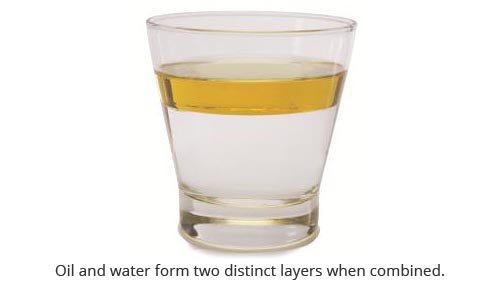
The nature of the solute and the solvent determines whether they will form a solution or not. There are substances whose nature and composition do not match such that they cannot form solutions with each other. For example, oil and water have very different nature, so they do not mix with each other. Sand also cannot form a solution with water. In the same way, salt does
not dissolve in oil.