Solutions
Solubility
Solubility refers to the amount of solute that can be dissolved in a given amount of solvent at a particular temperature. Substances such as sugar and salt dissolve easily in water. These substances are referred to as soluble substances. Solutes that do not dissolve easily in solvents are described as insoluble substances. Rice grains, corn, and
pebbles are examples of insoluble substances. Soil particles and ground pepper also do not mix easily in water. Thus, these are insoluble substances.
Factors that Affect Solubility
Different factors affect the solubility of a solid solute in a liquid solvent. These factors include stirring, heating, the size of the solute, and the nature of the solute and solvent.
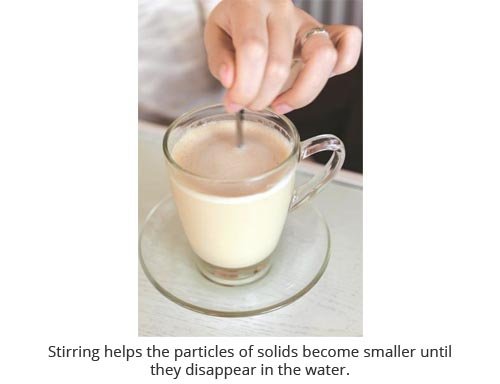
Stirring
Stirring makes the granules of the solute mix quickly with the particles of the solvent, causing the solute to dissolve faster in the solvent. For example, powdered milk dissolves faster in water when stirred.