Electric Circuits
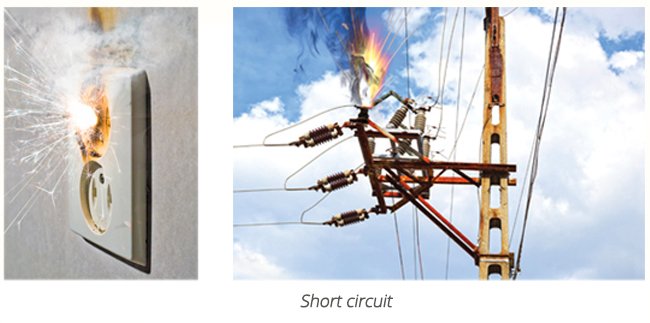
In any circuit, electricity should flow in only one direction. If electricity fails to travel in such manner, there may be a disturbance in the circuit, such as a "short". A short, also known as a short circuit, occurs when two wires have touched each other, but should not have, usually because their insulation has worn out. This shortens the path of the current and causes a power surge, in which there is too much current in the circuit. Short circuits should be attended to immediately because they are dangerous. They can cause explosions, fires, and other accidents.
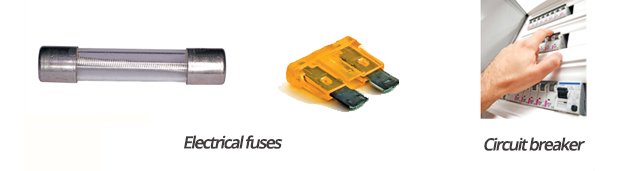
To prevent power surges, fuses or circuit breakers are installed in circuits. They act like switches that open the circuit when the electric current exceeds a particular amount. A fuse consists of a metallic ribbon enclosed by an insulated housing. When there is too much current, the ribbon melts and the circuit opens. A circuit breaker consists of joint metal strips that bend far to the left when they overheat. The strips open the circuit and flip the outside switch. Unlike a fuse, a circuit breaker can be reset using this switch.