The Electric Circuit
In electrical devices, a closed pathway defines where electric current will pass through. This is called a circuit. All circuits are made up of four parts.
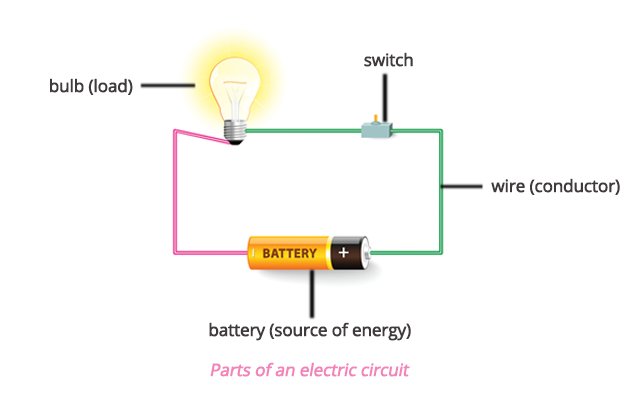
The first part is the energy source. Voltage pushes out electrons from the source into the second part, the wire. The rate at which electricity flows through the wire is called current. The third part is the load or device that converts electrical energy to another form of energy. Examples of loads are bulbs, heaters, speakers, and monitors.
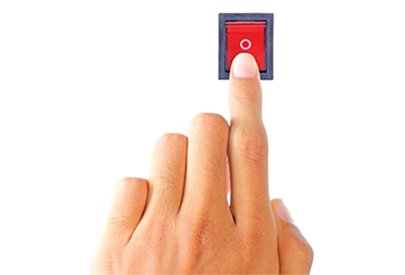
For a circuit to function, there should be no breaks in it because electricity needs a continuous pathway to pass through. Cutting a wire, for example, breaks the circuit. An electrical device, called a switch, allows you to open or close a circuit. The switch, which is the fourth part of a circuit, enables you to control the flow of electricity. Turning the lights on and off in your house is done by pressing a switch.