Main Types of Cells
Eukaryotic Cells
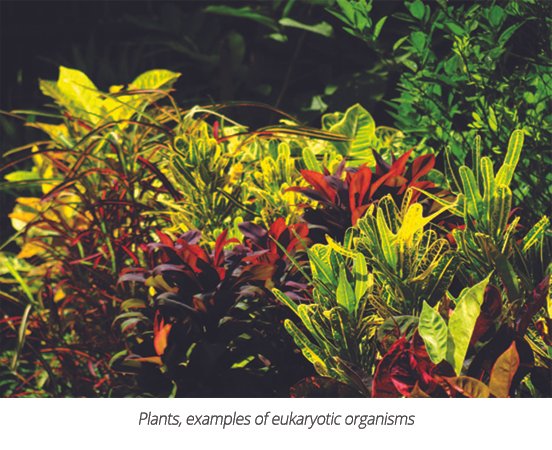
Eukaryotic cells have a distinct nucleus and distinct organelles. They are present in higher forms of organisms such as protists, fungi, and animals. Unlike the prokaryotes, they are larger and have more chromosomes. They may be single-celled, colonial, or many-celled.
All cells, whether prokaryote or eukaryote, have the same basic structure.
They generally consist of three main parts: cell membrane, nucleus, and cytoplasm. However, plant cells have a cell wall that encloses the cell membrane. Plant cells also differ from animal cells in terms of the organelles they contain.