Main Parts of Cells
Cell Membrane
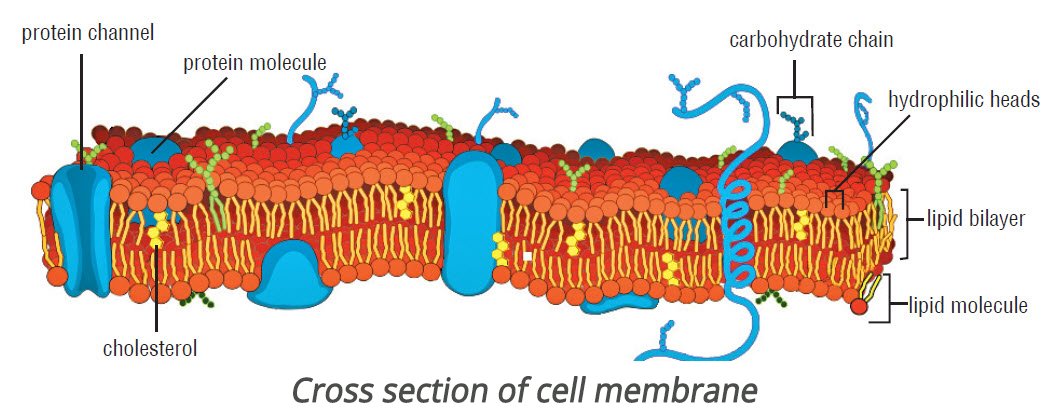
The cell membrane holds the cell together. It is made up of two layers of molecules and in plants is protected by the cell wall, a rigid nonliving structure that serves as framework for the cell and protects it. The cell membrane is thin and has small openings in it that allow substances such as water, amino acids, certain kinds of sugar, and lipid-soluble substances to pass in and out of the cell. However, it does not allow polysaccharides, proteins, and very large molecules to enter the cell.
The Nucleus
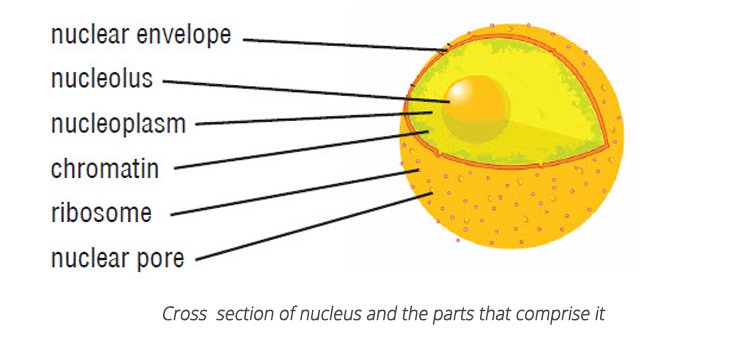
The nucleus acts as the cell’s command center as it controls the organism’s movement, growth, and reproduction. Within it is found the DNA, or the nucleic acid that gives the cell its unique characteristics.
The nucleus is made up of the nuclear envelope, nucleolus, chromatin, ribosomes, and nuclear pores.