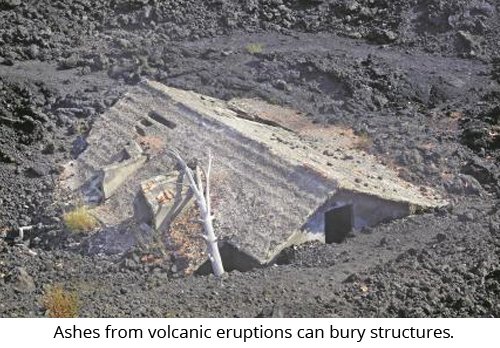
Effects of Volcanic Eruptions
Pyroclastic materials—a mixture of hot rock fragments, ash, and superheated gases—from volcanic eruptions can damage a wide area. These materials create an eruption column of over 19 m high.
Ash particles rise up to as high as 24 m and fall to the ground similar to an avalanche or landslide. When Mayon erupted in 1993, the nearby communities were damaged by pyroclastic flows. Pyroclastic flow is a flow of hot and dry gases and fragments. The eruption left 75 people, mostly farmers, dead.
The lava that flows on the surface can permanently bury areas where people, animals, and plants live. Lava flows can cause fire and destroy everything in their path. Many lives can be lost.
If mud and rocks from a volcanic eruption mix with rainwater, fast-moving mudflows are created. This mudflows is called lahar. It is made up of pyroclastic materials and water that flow down from the volcano. Lahar flows fast and can be 140m deep. It is very destructive; it can destroy any structure in its path. Lahar flows can bury houses, churches, and other structures. Lahar flows can destroy agricultural lands and carry heavy objects and deposit them in low places.