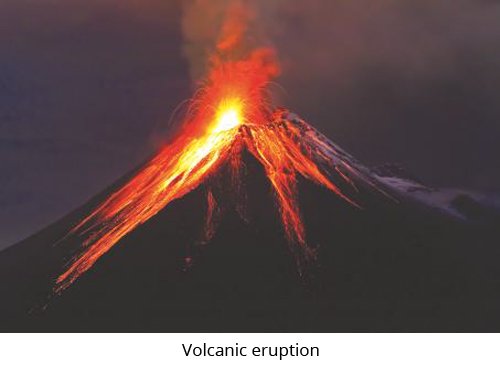
Volcanoes
A volcano is a landform on the Earth's crust. It has an opening at its tip where lava, ash, and gases are expelled. Volcanoes are usually formed in subduction zones. The subduction zone is an area where two lithospheric plates collide. The edge of one plate descends beneath the other.
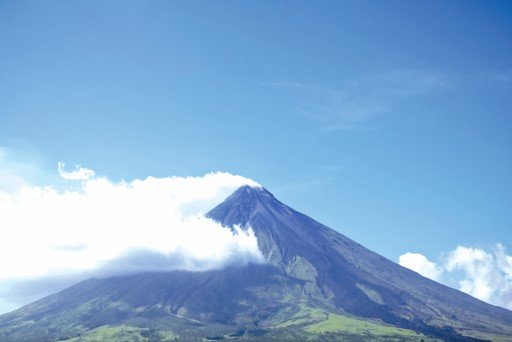
The subducted plate melts due to the high temperature in the mantle and becomes magma. This results to a wide volcanic region, called a hot spot, where the magma can go through the plates and erupt into a lava flow or fountain.
Magma being pushed from the Earth's interior to the Earth's surface gradually builds a volcano.
Scientists believe that although the Earth's interior is very hot, the magma inside is solid due to the great pressure above it. If the pressure decreases because of the formation of faults in the rocks, the magma becomes liquid and flows toward areas where pressure is low. When it reaches the surface, volcanic eruption takes place. Lava, ashes, fragments of solid materials, and smoke come out of a hole in the ground. As more eruptions occur, more materials are deposited in the surrounding area near the hole. In time, this pile of materials grows to a height; thus a volcano is formed.