Echinoderms
Echinoderms are spiny-skinned, marine invertebrates. They include the sea stars also known as starfishes, brittle or basket stars, sea urchins, sea cucumbers, and crinoids or feather stars. They are distinguished from other invertebrates by having five arms or more, all of which equally radiate from the center of their bodies. The internal support of their bodies consists of interlocking calcium carbonate. They do not have body parts like brain, eyes, and a heart. Some species, however, have light-sensitive parts of their arms. The mouth of most species, except sea cucumbers, crinoids, and some sea urchins, is situated underneath their bodies, while the anus can be found on top.
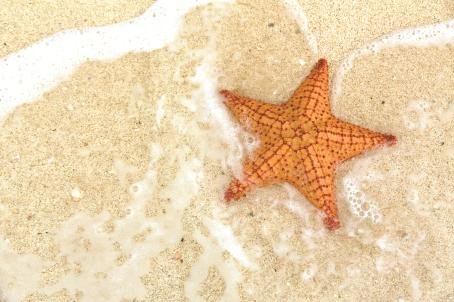
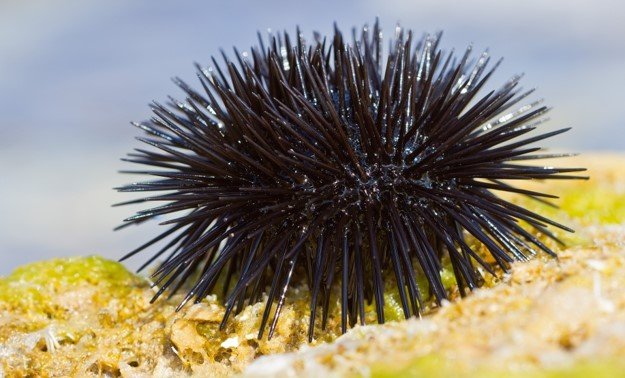
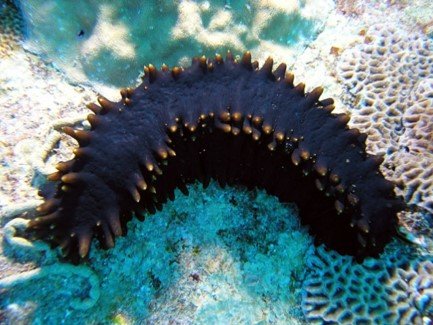
The circulatory system of echinoderms is called the water vascular system. Their tube feet, which have suction pads, are extensions of this system which function primarily in respiration and feeding, and secondarily in locomotion or movement. Echinoderms have the ability to regenerate lost body parts.
Fertilization takes place in open waters. Their life cycles vary among kinds. Their feeding habitats vary among their species. Crinoids and brittle stars are filter feeders. Sea urchin are grazers or scrapers of food. Sea cucumbers are deposit feeders, while sea urchins are carnivorous.