Invertebrates
Ninety percent of animals on Earth are invertebrates. They vary in shape and size, and are found everywhere. They do not have vertebral or spinal columns like vertebrates do. Invertebrates include six major groups of animals - worms, mollusks, arthropods, poriferans, cnidarians, and echinoderms.
Worms
Worms may be round (round worms), flat (flat worms), or segmented (segmented worms). Round worms are classified under phylum Nematoda. Examples of common round worms are threadworms and hook worms. Flatworms are classified under phylum Platyhelminthes. They include the flat ribbonlike worms in dogs and other animals. Segmented worms are group under phylum Annelida. The earthworm is the most common example of annelids.
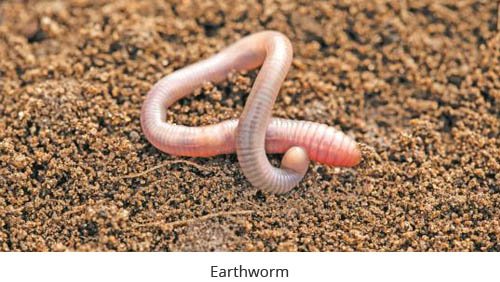
Worms vary in size and color. Their soft bodies are surrounded by constricting muscles and tough skin. Instead of a skeleton, their bodies are filled with fluid. Worms may be found burrowing in soil and underwater (freeliving and nonparasitic) or as parasites living in the bodies of humans and other animals. Many species of worms act as decomposers. They are important links in the food chains of many ecosystems.