Arthropods
The bodies of arthropods are protected by an external skeleton or exoskeleton. This exoskeleton, called carapace, is made up of a rigid substance called chitin.
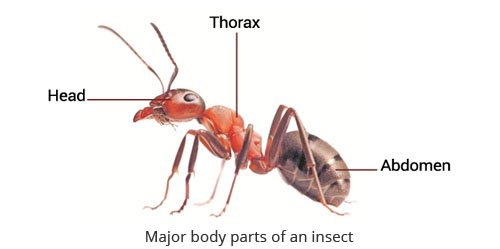
Interestingly, 90% of arthropods are insects. Insects are considered the most numerous and most diverse animals on Earth. Their body shapes enable them to exhibit different kinds of movements. Their body is made up of three major parts - the head, the thorax, and the abdomen. The head bears a pair of antennae, eyes, and a mouth. The thorax is the chest region, which bears the wings and the jointed legs. The abdomen bears the internal organs.
Insects undergo metamorphosis. Metamorphosis is the process by which insects change in form as they pass through different stages of development in their life cycles. Generally, from eggs they become larvae. From the larval form, they develop into chrysalis or pupae, from which they grow into an adult form. Most insects develop wings when they become adults. The life cycles of insects vary depending on their species.
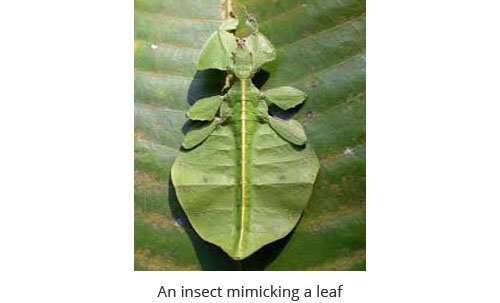
Insects are capable of making themselves appear like rocks, leaves, wood, or even animals. This ability to copy the appearance of other things in their surroundings is called mimicry. Insects mimic their surroundings to protect themselves from danger, specifically from being preyed on by other animals.