Agents of Weathering
Water
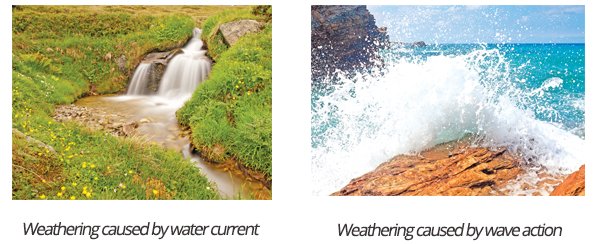
Running water, like streams and rivers, is one of the primary forces that shape the Earth's surface. The strong current of these water systems can push boulders and stones and carry away soil along their courses. In coastal areas, the force of the crashing waves can break rocks off cliffs and wear away shorelines.
Rain also causes weathering. When carbon dioxide from the air dissolves in rainwater, it forms carbonic acid in a process called carbonation. Carbonic acid reacts with minerals, such as those containing iron, calcium, and magnesium to form carbonate compounds. These compounds easily dissolve in water and erode rocks quickly. One of the least resistant minerals to carbonation is calcite, which is present in limestone and marble.
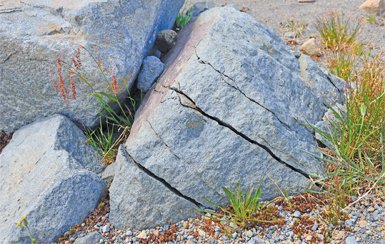
The action of water and temperature is one of the most important means of weathering. This usually occurs in high altitude where temperatures are very low. When rain falls on mountaintops, water runs off on soil and may seep into cracks in rocks. At night when the temperatures usually drop, the water in the cracks freezes. As water freezes, it expands by about 10% of its volume. The expansion causes the cracks to become larger, eventually forcing big rocks to break off. This process is called frost wedging.