Natural and Violent Motions
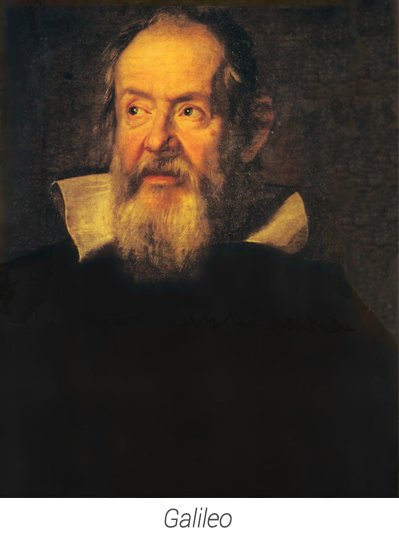
To counter Aristotle’s hypothesis about free-falling bodies, it is said that Galileo dropped objects of different weights from the top of the Leaning Tower of Pisa in Italy to prove that all objects fall at the same speed and acceleration. Indeed, he found out that an object twice as heavy as another does not fall twice as fast. Instead, objects of different weights hit the ground simultaneously when released from the same height at the same time.
It was also Galileo who observed that in the absence of a retarding force, the tendency of a moving object is to move continuously. He called this property of objects to remain in motion as inertia. Aristotle did not recognize the concept of inertia because he failed to imagine what motion would be like without friction. In his experiences, all motion was subject to resistance.