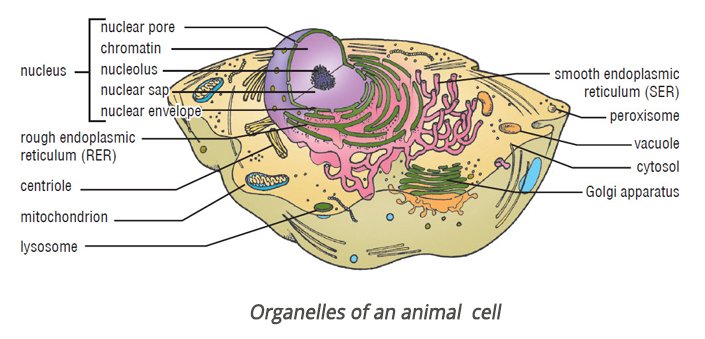
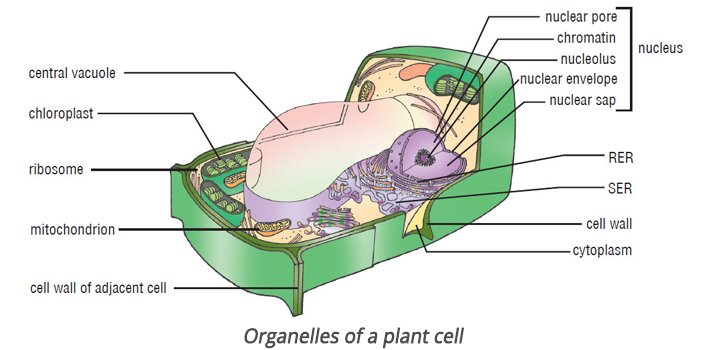
Main Parts of Cells
Cytoplasm
The cytoplasm is a gel-like or viscous solution within the cell, located outside the nucleus but still within the cell membrane. It is made up of three main components: cytosol, organelles, and inclusions.
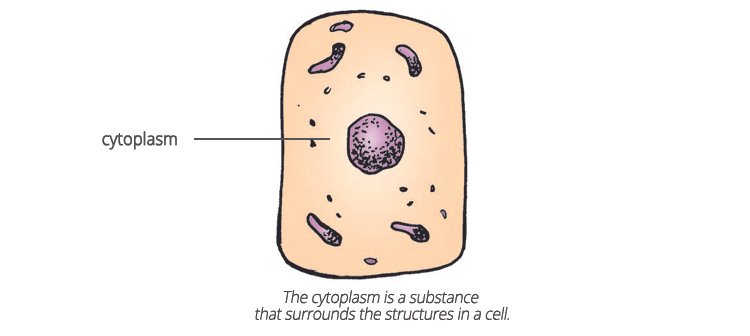
The cytosol is the clear liquid in the cytoplasm. The organelles are distinct membrane-bound particles and include the following:
- Plastids — large membrane-bound organelles that are found in the cytoplasm of plant cells. They are classified into chromoplasts and leucoplasts. Chromoplasts consist of chloroplasts with chlorophyll a (blue green), chlorophyll b (yellow green), carotenes (dark yellow orange), and xanthophyll (light yellow). Leucoplasts are the center of starch grain formation.
- Mitochondria or chondriosomes — considered the cell’s powerhouses because they capture chemical energy from the food taken in and produce energy that it then releases to the cell, thus allowing the cell to carry out its functions. The energy that the mitochondria produce is called adenosine triphosphate (ATP), which is then used for synthetic reactions, active transport, and all energy-requiring processes in cells.